
How to identify a private jet by Its external features?


The private jet market features a wide range of manufacturers and aircraft models, each with distinctive design signatures. Learning how to recognize a private jet by its exterior features is not only possible — it’s easier than you might think. With a bit of practice, you can quickly identify the aircraft manufacturer, determine the jet family, and even pinpoint the exact model.
Every private jet brand incorporates unique visual characteristics. Details such as the shape of the nose, window configuration, engine placement, wing design, and tail architecture often reveal the jet’s identity at a glance.
In this guide, we’ll explore the key exterior elements that help you accurately identify a private jet and better understand the differences between leading aircraft manufacturers.
Key elements for a private jet identification:
-
The Nose and Cockpit
The shape of the nose and windshield varies significantly between manufacturers.
- Some aircraft have a pointed, streamlined nose.
- Others feature a more rounded or “bulbous” profile.
- The windshield can be angular, wrap-around, or very vertical.
These details are often a manufacturer’s first “visual signature.”
-
Wings and Winglets
The wingtip devices (winglets) are highly distinctive:
- Curved and fluid on certain high-end jets.
- Vertical and thin on other models.
- Absent on some light jets.
For example, the majority of Cessna Citation Jet models do not have winglets, unlike many larger jets.
3.Engines
The number, size, and location of the engines are major indicators.
- The vast majority of private jets have two engines mounted at the rear of the fuselage.
- Commercial airliners generally have their engines suspended under the wings.
- Some models are recognizable by their three engines, a rare configuration today.
4. Windows
The windows are an extremely revealing element:
- Oval
- Rectangular
- Square with rounded corners
- Large or small; widely spaced or close together
Some manufacturers have made the shape of their windows a true brand identity.
5. The Empennage (The Tail)
The tail assembly can be:
- T-tail: The horizontal stabilizer is placed at the top of the vertical fin.
- Classic cross-style.
- Mid-height position.
On private jets, the T-tail is very common due to the rear-mounted engines.
6.Registration Number
The registration is a code painted on the fuselage or the tail. It helps identify:
- The country of registration.
- Sometimes the type of operation.
Prefix Examples:
- N-: United States
- G-: United Kingdom
- F-: France
On private jets, it is often located near the engines or at the rear of the fuselage.
Now that we’ve outlined the different external and visual features used to identify an aircraft, let’s take a closer look at each private jet manufacturer and explore their distinctive design signatures in detail.
Recognizing major private jet manufacturers
Let’s look at the visual signatures of the industry’s leading builders.
-
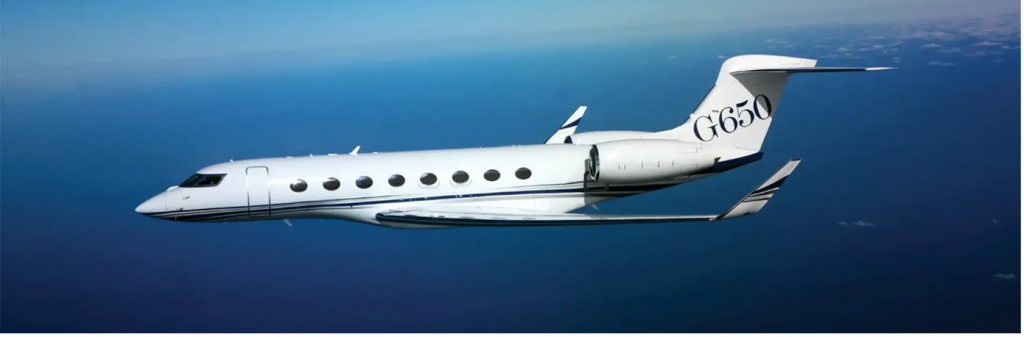
Gulfstream Aerospace: The “Large Ovals”
The most foolproof sign of a Gulfstream is the shape of its windows.
Distinguishing Signs:
- Giant oval windows (the largest in the industry).
- Two rear engines and a T-tail.
- Pointed, sleek nose.
- Very fluid, curved winglets on recent models (G650, G700, G800).
If you see large, perfectly aligned elliptical windows, there’s a high chance it’s a Gulfstream.
-
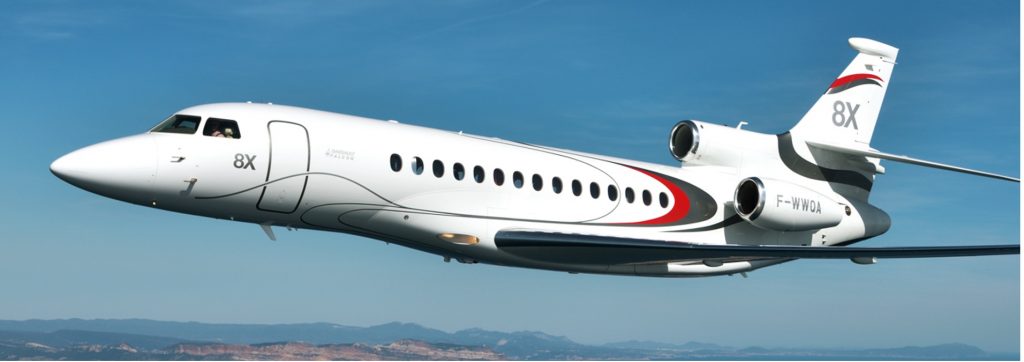
Dassault Aviation (Falcon): The Elegant Trijet
The French manufacturer is famous for its Falcon aircraft line.
Major Signature:
- Three engines on iconic models like the Falcon 900, 7X, and 8X (two on the sides + one integrated into the tail).
Other Features:
- Angular, wrap-around cockpit.
- Rectangular windows with rounded corners.
- Tail sometimes not in a T-shape on older models.
Note: Recent models (6X, 10X) are twin-jets but retain a very aerodynamic silhouette.
-
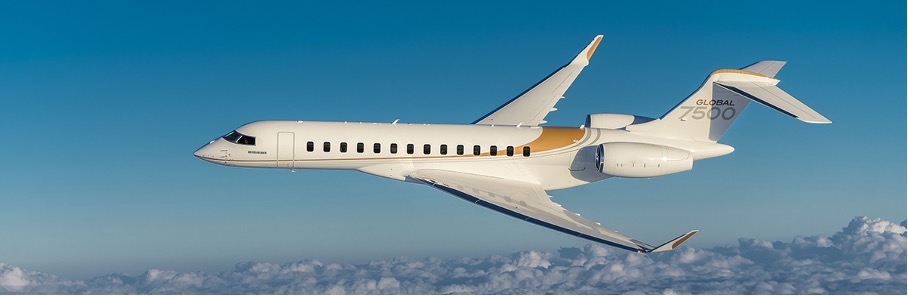
Bombardier Aviation (Global): The Sleek T-Tail
Often confused with Gulfstream from a distance, the Bombardier Global has several notable differences.
Key Clues:
- Two rear engines (never three).
- More square-shaped windows.
- Very clean T-tail design.
- Wide wings with a sharp sweep.
- A more rounded and imposing nose.
The 7500 and 8000 models are particularly recognizable by their massive fuselage.
-
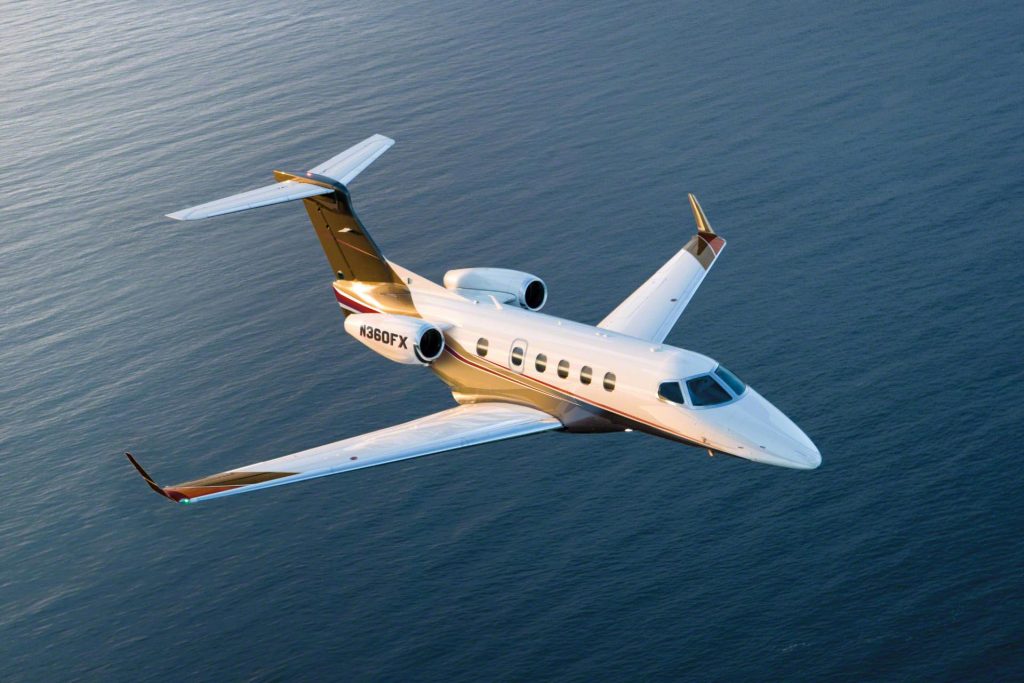
Embraer (Phenom 100 & 300): The Modern Look
The Phenom series has a very dynamic, modern style.
Distinguishing Signs:
- Large rectangular windows stretched vertically.
- A sharply downward-sloping nose.
- An impression that the plane is “looking down.”
- Robust integrated airstair (especially on the Phenom 300).
-
Cessna (Citation): The Robust Classic
Cessna has a wide range of models (M2, CJ3, CJ4, Latitude).
Common Traits:
- Wrap-around windshield.
- Classic tail on small models; straight T-tail on the CJ4.
- Very vertical winglets on modern models.
- Often a more rounded nose.

FAQ – Identifying a Private jet at a Glance
Can you really recognize a plane with the naked eye?
Yes, especially for private jets. Each manufacturer have very distinct visual signatures.
What are the visual elements that can distinguish one manufacturer from another?
There are 5 key visual elements
- nose and cockpit
- wings & winglets
- engines
- windows
- The tail
What is the main difference between a private jet and an airliner?
Private jets generally have rear-mounted engines, a T-tail, a narrower fuselage, and fewer windows.
Why do some jets have three engines?
Trijets, like some Falcons, were designed to improve performance on short runways, offer extra redundancy, and optimize range at a time when regulations limited twin-engine aircraft.
Does the registration identify the exact model?
Not directly. It primarily identifies the country of registry. To find the exact model, you should check an aviation database using the registration code.
Conclusion
Recognizing an aircraft by its external features becomes an exciting game once you know what to look for. The number and position of engines, the shape of the windows, or the tail architecture are all valuable clues.
To summarize:
- Large oval windows? → Gulfstream
- Three engines? → Dassault Falcon
- Square windows and massive fuselage? → Bombardier Global
- Sloping nose and tall windows on a small jet? → Embraer Phenom
- Small jet with simple lines and vertical winglets? → Cessna Citation